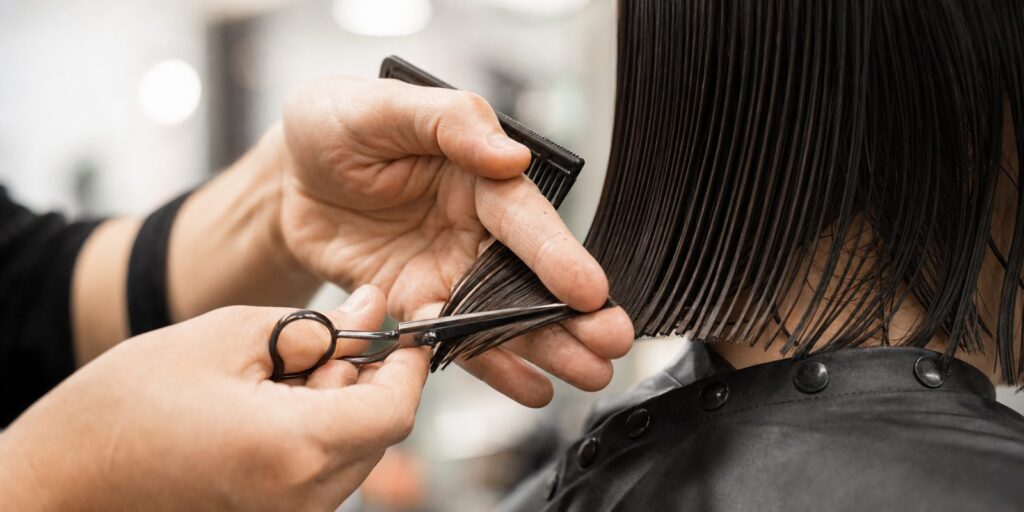
Haircuts in Vienna VA start with a conversation about how you want your hair to look and work in daily life. At HairSocial, our stylists use a free consultation to hear your priorities, look at how your hair falls, and agree on a clear plan before the cut begins. You do not need salon vocabulary or a folder of reference photos. A few details about length, shape, routine, and what you want to keep can make the appointment easier to guide.
Haircuts in Vienna VA Start With a Free Consultation
A consultation gives you and your stylist time to get on the same page. You can explain what feels easy about your current cut, what takes too long, and what you would like to change. If you are unsure, say that too. Your stylist can ask follow-up questions and discuss options that fit the way your hair behaves.
Think about your usual morning routine before you arrive. Do you air-dry, blow-dry, or use a hot tool? How much time do you want to spend styling? Do you tie your hair back for work, exercise, or caregiving? These details help our stylists consider a shape that fits your habits, not just a picture.
Bring up anything you want to preserve. That might be length around the face, the ability to make a ponytail, a fringe, or the general outline of your current cut. You can also explain what bothers you, such as ends that feel heavy or layers that need daily styling. Clear priorities help your stylist plan the conversation.
What Our Stylists Look At Before Cutting
Your stylist looks at your current length, the outline of your cut, and the way the hair moves when you turn your head. They may ask how you usually part it and whether you style it wet or dry. A quick look at the ends can help clarify whether you want a small trim or a more noticeable change.
Our stylists also consider texture and density. Texture describes how each strand feels, such as fine or coarse. Density describes how much hair grows across an area. These traits are different, and they can affect how a shape appears once the hair settles.
Haircuts in Vienna VA can begin with the same conversation, but each head of hair brings its own details. Your stylist may watch how the hair falls near the crown, temples, neckline, and face. They can point out places where a layer may sit differently or where the ends may look fuller or lighter.
The goal is not to diagnose your hair or promise an exact result from a photo. It is to notice useful details, explain the options in everyday language, and agree on what the appointment can accomplish. Ask questions whenever a term or suggestion feels unclear.
Describe Length and Shape Without Relying on Photos
A reference photo can help show a mood or outline, but it cannot predict the same result on every person. The model may have different density, texture, length, or styling habits. Use a photo as a starting point for discussion, then explain which parts appeal to you and which do not.
Instead of saying only “shorter,” choose a landmark. You might want the ends near your collarbone, above the shoulders, or around your jaw. If you want to keep most of your length, say that first. Your stylist can repeat the plan back and clarify how much the shape may change.
It can help to separate your requests into keep, change, and avoid. For example, you may want to keep the length at the back, add movement around the face, and avoid short pieces near the temples. This turns a broad idea into a few points your stylist can check with you.
- Keep: Name the length, part, fringe, or outline you want to preserve.
- Change: Point to the area where you want more shape, movement, or less weight.
- Avoid: Mention styling steps or lengths that do not fit your routine.
- Show: Use a photo as a reference, then describe what should differ for you.
Before the first cut, ask your stylist to summarize the plan. You can confirm the length and shape, or adjust your request while you are still talking. That short check helps both of you work from the same picture of the goal.
Growth Patterns, Density, and Cowlicks in Plain Language
Hair does not grow in one direction everywhere. A growth pattern is the direction hair naturally points as it leaves the scalp. At the crown, a swirl may send hair in several directions. Near the hairline, a cowlick can push a small section up, sideways, or away from the rest.
A cowlick does not mean you cannot change your style. It does mean that a section may settle differently from hair nearby, especially when it dries. Your stylist can show you where that pattern sits and discuss a shape or styling approach that works with it. A cut can change length and outline, but it cannot change the direction in which hair grows.
Density refers to how closely hair grows across the scalp. Fine or coarse describes individual strands, not the number of strands. When you explain that your hair feels “thin” or “thick,” your stylist may ask whether you mean strand size, overall fullness, or how the ends look. Those details point to different haircut choices.
Use ordinary words if that feels easier. You can say, “This spot sticks up after I wash it,” or “The sides look fuller than the top.” Haircuts in Vienna VA are easier to plan when you describe what you notice at home. Your stylist can connect those observations to the shape and talk through what a cut can change.
What a Haircut Appointment Includes
Every HairSocial haircut includes a consultation, a wash, and styling tips. The consultation comes first, so you can explain your goal before the wash and cut. Your stylist can ask about your routine, review your length and shape preferences, and clarify what the plan includes.
During the wash, let your stylist know if you prefer a particular part or have a comfort request. After the cut, pay attention to how the shape sits as your stylist styles it. Ask which steps matter most at home and what tools or products you already own might suit the routine you described.
The styling tips should connect to your habits. If you want to air-dry, ask how to work with the shape without a long blow-dry. If you use a brush or hot tool, ask how to direct the hair around a cowlick. Small, practical questions can help you understand what upkeep the cut may involve.
For general at-home care, the American Academy of Dermatology’s healthy hair tips recommend gentle handling of wet hair and limiting excessive heat. That advice is general, not a haircut prescription. Your stylist can explain how the appointment’s styling tips relate to your own texture and routine.
Haircuts in Vienna VA and Starting Prices
Haircuts in Vienna VA at HairSocial have published starting prices, so you can review the menu before booking. Women’s cut and style starts at $65. Men’s and kids’ cuts start at $45. The final service may depend on the cut you choose, so share your goal during the free consultation and ask your stylist to explain the plan.
You can review the Salon Services Menu before your visit. If you are ready to request an appointment, use the booking and contact section. Choose the service that best matches what you want to discuss, and include a note if you are considering a larger shape change.
If you are deciding between maintaining your current length and changing the outline, our related guide, How Often to Cut Hair for Healthier, Stronger Strands, discusses how different cut goals can affect trim timing. Use it as a companion to your consultation, not as a fixed schedule for every head of hair.
Before you leave, make sure you understand the shape, the styling steps, and any upkeep your stylist discussed. You can ask for a simple recap in everyday terms. A clear conversation helps you choose a haircut that fits your preferences and the way you plan to care for it.

Jessica Colors
Jessica Colors writes about color, cutting and care for HairSocial, a salon with two Northern Virginia locations: Tysons Galleria and Idylwood Plaza in Falls Church. Her posts stick to the practical side of a service — what it involves, what it starts at, how long it holds and what it takes to keep it looking good between appointments. Anything specific to your own hair is better answered in person, and consultations are free at both locations.