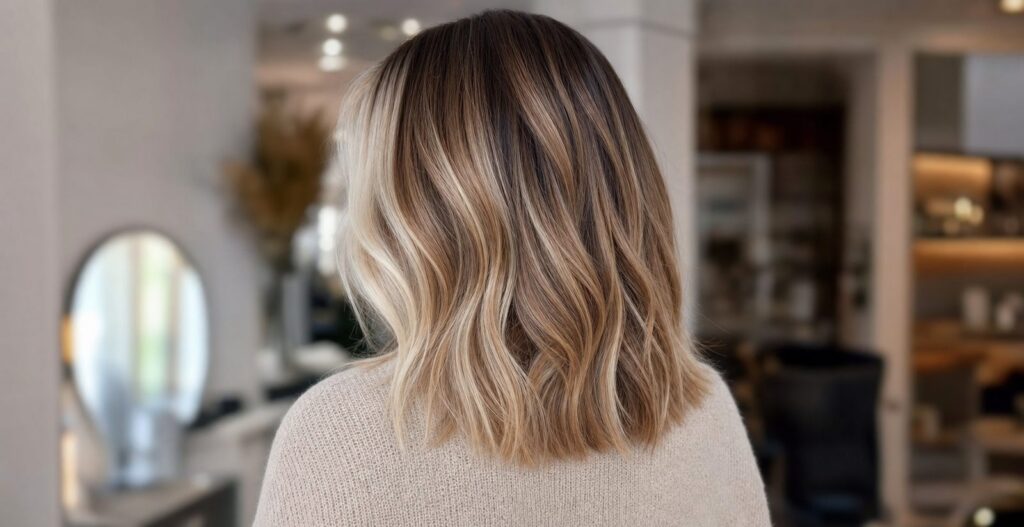
Choosing highlights in Arlington VA starts with placement, not a request for “more blonde.” Your part, hairline, face shape, and usual styling routine all guide the plan. During a free consultation, our stylists look at how your hair falls when it is down and how you wear it most days. That conversation helps set a clear service scope before any lightener touches your hair.
Highlights in Arlington VA Begin With Your Part
Your part creates the visual center of a highlight service. A center part can call for balanced brightness on both sides. A side part may need more focus on the heavier side so the color does not disappear under the sweep of hair. Your stylist also considers cowlicks, fringe, and the way your roots show between appointments.
Face shape matters, but it does not dictate one fixed formula. The goal is to place brightness where it supports your haircut and daily movement. For example, a few pieces near the cheekbones can draw attention to layers. Pieces that begin farther back can keep the front soft. A consultation lets you compare these options before choosing a section pattern.
What We Look At Before Placement
- Where your part sits when you style your hair at home.
- How your hairline, fringe, and face-framing layers move.
- Whether you usually wear your hair straight, wavy, or pulled back.
- Your existing color, previous lightening, and any areas that need a strand test.
How Placement Changes the Result
Highlights can look brighter without covering every section. Placement controls the rhythm between light and natural hair. Fine pieces through the front can create a lighter frame. Wider spacing through the crown can leave more depth. The same number of foils can look very different when the sections move.
Our stylists map the service to your haircut instead of treating every head as a grid. Layers may need brightness at different heights. A blunt cut can benefit from a cleaner, more deliberate pattern. Curly or wavy hair may need visual spacing that accounts for shrinkage and movement. These choices help the highlights read naturally as you move.
Full highlights use half-inch sections for uniform lift. That method creates more even coverage across the head. It does not mean every strand receives lightener. Your consultation still determines the hairline, part, and perimeter sections that make sense for your goal.
Partial or Full: Choose by Placement
A partial service concentrates highlights in selected zones. Those zones often include the hairline, part, crown, or visible top layers. It can suit someone who wants a focused change or who prefers natural depth underneath. Partial does not mean a smaller version of the same map. It means the map covers fewer areas.
A full service places highlights through more of the head. It can create a consistent pattern when you wear your hair up, change your part, or want brightness beyond the top layer. The section plan still matters. Full coverage with thoughtful spacing can look more dimensional than dense placement in one area.
Consider your styling habits before you choose. If you keep the same part and wear your hair down, a partial may put brightness where it shows. If you switch parts or wear ponytails, a fuller map may offer more continuity. Your stylist can explain the difference with a section plan during the free consultation.
Starting Prices for the Two Maps
Highlights start at $250 for a partial and $300 for full. These are starting prices, not a promise of the final service scope. Hair length, density, prior color, and the sections you choose can affect timing and the plan. Review the Salon Services Menu before your appointment, then use the booking form to request a consultation.
Where the Money Piece Fits In
A money piece is a brighter face-framing section near the front hairline. It can sit on both sides of the face or follow an asymmetrical part. The width, starting point, and softness should match your haircut. A narrow piece can add a small point of brightness. A wider piece creates a clearer frame.
The money piece works within a larger placement map. It should connect with nearby highlights instead of looking like an isolated stripe. Your stylist can blend the front into the part, crown, or layers. That connection matters when your hair moves or when you pull it back.
Ask how the front will look in the styles you actually wear. A piece that feels subtle with hair down may show more when tucked behind the ear. A bolder front can look different with a side part. The consultation gives you space to choose width and contrast before the appointment begins.
Highlights in Arlington VA for Your Daily Routine
Placement should work with real mornings. Tell your stylist whether you air-dry, use a round brush, wear a ponytail, or change your part. Those details affect which layers remain visible. They also help your stylist decide whether the front, top, or sides need more attention.
Think about your maintenance comfort, too. A softer root area can make the grow-out line less obvious. A brighter hairline may need more frequent toning or refresh work as it grows. Your stylist can describe what to expect without turning maintenance into a fixed schedule.
Home care supports the look between visits. Follow the product and washing guidance your stylist gives you. The American Academy of Dermatology also offers general hair coloring and perming tips. Use those ideas as general education, then follow the plan made for your hair and color history.
When a Strand Test Makes Sense
Previous box dye, dark color, or overlapping lightener can change the service plan. Bring that history to the consultation, even if the product no longer shows clearly. A strand test can show how your hair responds and whether the target tone fits the condition of the strand.
Strand testing also keeps the conversation specific. Your stylist can discuss lift, warmth, timing, and the next step from what the hair shows. If the change needs more than one visit, we will say so plainly. A gradual plan can protect the integrity of the appointment and give you a more realistic path.
Do not rely on a reference photo alone. Lighting, filters, texture, and starting color can make two examples look alike on a screen. Your hair’s history matters more than the label attached to a trend. Bring one or two images, then let the consultation narrow the plan.
A Clear Plan for Your Arlington Highlight Appointment
Start by noting how you part and style your hair. Save a photo taken in natural light if you want to show your current color. Write down any box dye, home lightener, or recent color service. These details help our stylists ask better questions during the free consultation.
Next, decide what you want to notice first. Is it brightness around the face, more light through the crown, or a balanced look when your hair is pulled back? That priority can guide the section map. It also helps distinguish a partial service from a full one.
Before you book, read the related guide on partial versus full highlights. It explains the broad service difference. Your appointment adds the personal details: your part, your face-framing pieces, your hair history, and the maintenance level you can manage.
Book Highlights in Arlington VA With a Consultation
Highlights in Arlington VA should begin with a plan you understand. HairSocial offers a free consultation so you can discuss placement, the money piece, partial or full coverage, and any strand-test needs. We will also explain when a color change requires more than one visit.
Review the starting services on the Salon Services Menu, then use HairSocial’s booking contact to get started. Bring your usual part and styling habits to the conversation. That information helps your stylist place highlights for how you live, not just how a photo looks.

Jessica Colors
Jessica Colors writes about color, cutting and care for HairSocial, a salon with two Northern Virginia locations: Tysons Galleria and Idylwood Plaza in Falls Church. Her posts stick to the practical side of a service — what it involves, what it starts at, how long it holds and what it takes to keep it looking good between appointments. Anything specific to your own hair is better answered in person, and consultations are free at both locations.