
To deep condition your hair at home, apply a rinse-out treatment to clean, damp hair that is not dripping, work it through the mid-lengths and ends, leave it on for the time on the label, then rinse it out completely. The right amount and frequency depend on whether your hair is fine, dry, color-treated, curly, or carrying too much product.
What is a deep conditioning treatment?
A deep conditioning treatment is a richer rinse-out conditioner that stays on your hair longer than your everyday conditioner. Its practical job is to add slip and softness, make detangling easier, and help hair look smoother and less frizzy. It is helpful maintenance for dry, textured, color-treated, or heat-styled hair. It is not a way to permanently repair broken hair or make split ends disappear.
Regular conditioner, deep conditioner, and hair mask are easy to confuse. On a product shelf, “hair mask” and “deep conditioner” are often used for a similar richer treatment, so the label matters more than the name. If it says rinse out, rinse it out. If it has a five-minute direction, do not assume it needs half an hour.
| Product | What it is for | How you use it |
|---|---|---|
| Regular conditioner | Everyday slip, softness, and easier detangling after shampoo. | Usually a short rinse-out step. |
| Deep conditioner | A more intensive rinse-out treatment when your lengths need more softness, flexibility, or help with frizz. | Leave on for the product’s stated treatment time, then rinse thoroughly. |
| Hair mask | Usually a richer treatment marketed for a specific need, such as moisture, smoothing, or color-treated hair. | Use it as its label directs. Many masks are used like deep conditioners, but not all have the same timing. |
How do you deep condition your hair at home?
Good technique matters more than piling on more product. Start with a clean scalp and hair that has been squeezed dry with your hands or pressed once with a towel. If water is running off your hair, it will dilute the treatment and make even coverage harder.
- Read the label before you start. Check whether the product is a rinse-out treatment, whether it is moisture-focused or protein-containing, and its stated time. The label wins over any general timing rule.
- Shampoo if your scalp is oily, dirty, or coated with styling product. Rinse fully. Then gently squeeze out the extra water. For most rinse-out treatments, hair should be damp, not soaking wet. A product specifically made as a pre-shampoo treatment is the exception, so follow that label.
- Start with less product than you think. Try a nickel-size amount for short or fine hair, a quarter-size amount for shoulder-length hair of average density, or two quarter-size portions for long, thick, or very curly hair. Divide that amount between sections. Add a little more only where the hair still feels uncoated, usually on the ends.
- Apply from the ends upward. Smooth the treatment through the oldest, driest part first, then work up through the mid-lengths. Keep it off the roots if your scalp gets oily or your hair goes flat easily. If your hair is very dry or tightly curled, you may bring a small amount closer to the root area, provided the product is suitable for that use.
- Distribute it instead of just coating the surface. Finger-comb each section, or use a wide-tooth comb gently, especially with textured hair. You want each section to feel slippery, not buried under a white layer of product.
- Leave it on for the directed time. Ten to 30 minutes is common, but it is not a challenge to beat. Put on a shower cap if you want to keep the treatment off your clothes. Gentle warmth can be used only if the product allows it, but very hot air is unnecessary.
- Rinse with lukewarm water until the excess is gone. Lift and separate thick hair as you rinse, especially at the nape and behind the ears. Your hair should feel soft and have slip, not waxy, heavy, or coated.

Should you apply deep conditioner to wet or dry hair?
For a standard rinse-out deep conditioner, use damp hair after shampooing and after squeezing out excess water. This is the most reliable way to spread the product evenly without wasting it. Applying deep conditioner to soaking-wet hair is a common reason it seems to do nothing, because the water carries and dilutes the formula before it can sit evenly on the lengths.
Applying deep conditioner to dry hair is only right when the product specifically says it can be used before shampooing or on dry hair. Do not turn a regular rinse-out conditioner into a dry-hair treatment just because it sounds more intense. It may be harder to distribute, and it can leave the next wash feeling coated.
How often should you deep condition your hair?
How often you should deep condition depends on your hair’s density, texture, chemical history, wash schedule, and how it feels after the last treatment. Start with the range below, then adjust one variable at a time. If you change the mask, leave-in, styling cream, and shampoo at once, you will not know what helped or what caused the heaviness.
| If your hair is… | A practical starting frequency | What to watch for |
|---|---|---|
| Fine, straight, or easily weighed down | Every other week, or after every few washes if your ends are dry. | Flat roots, pieces that separate, or a coated feel mean use less product or space treatments farther apart. |
| Thick, curly, coily, or dry through the lengths | About weekly, adjusting to your wash routine. | Focus on thorough distribution and rinsing, not simply leaving it on longer. |
| Color-treated, lightened, heat-styled, or chemically processed | About weekly with a moisture-focused treatment, unless your stylist or product directions say otherwise. | Dryness and breakage may need a broader plan than a mask. Do not automatically add protein at every wash. |
| Generally healthy hair with occasional dry ends | Every two to four weeks, or before a time when you want easier detangling and styling. | If your everyday conditioner is already doing the job, more treatment is not necessarily better. |
Does deep conditioning help with frizzy hair?
Yes, deep conditioning can help with frizzy hair when the frizz is coming from dry, rough, tangled lengths. The conditioner gives the strands more slip, so they catch on one another less and lie more smoothly. That can make your hair look shinier and make detangling less of a fight.
It will not solve every kind of frizz. Humidity, new breakage, heat damage, rough brushing, and split ends can all show up as frizz. A treatment may improve the feel for a wash or two, but it cannot permanently fuse damaged ends or replace heat protectant and gentle handling. If your hair gets frizzier after a rich mask, the issue may be residue or a formula that is too heavy for your hair, not a shortage of conditioner.
Do you need moisture or protein?
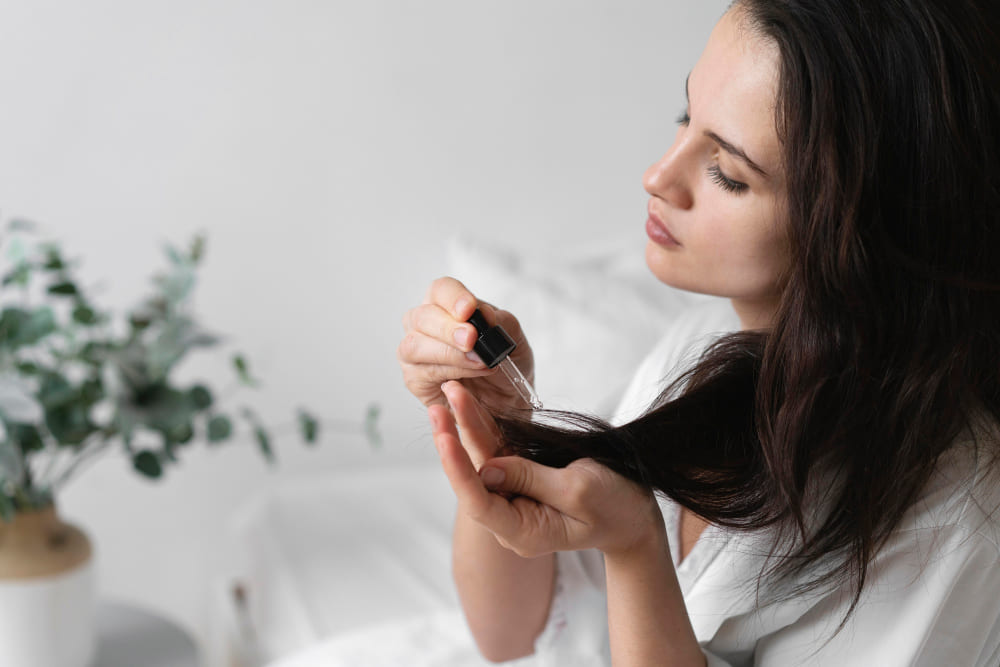
This is where a salon consultation can save you from buying another “repair” product that makes your hair feel worse. In the chair, we often see hair called damaged when it is actually saturated with heavy products, and hair called dry when several protein-rich products are being layered together. The words on the front of a jar are not enough. Look at your whole routine: shampoo, conditioner, leave-in, curl cream, and styling products.
- Start with moisture-focused conditioning if your lengths feel rough, dull, tangled, or dry. Look for a treatment that is meant to soften and condition, then see how your hair responds after a few uses.
- Be cautious with protein-heavy treatments if your hair feels stiff, straw-like, brittle, or snaps easily after you have been using several strengthening products. Pause the extra protein products, rinse thoroughly, and simplify the routine instead of adding another repair mask.
- Do not diagnose your hair with one “stretch test.” Hair that feels overly soft, limp, gummy when wet, or unusually stretchy can reflect damage, too much product, or a formula that is not a fit. It does not automatically mean you need more protein.
- When in doubt, change one thing. Use a straightforward moisture treatment, skip layering several masks, and note whether your hair feels cleaner, more flexible, and easier to comb after the next wash.
Is an at-home treatment enough, or should you book a salon treatment?
| At-home deep conditioning | Salon treatment | |
|---|---|---|
| What it realistically does | Maintains softness, slip, and manageability between appointments when you use a suitable rinse-out product correctly. | Lets a stylist assess the hair and choose a treatment and application method around your texture, color history, buildup, and styling habits. |
| How long does it last? | The softer feel is temporary and changes with washing, weather, and styling. It is maintenance, not a permanent repair. | Also temporary. A salon treatment can be more tailored, but it still needs appropriate at-home care afterward. |
| Best time to choose it | For regular upkeep, mild dryness, and a routine you can repeat consistently. | When your hair has changed after lightening or chemical work, keeps breaking, feels persistently coated, or you are unsure what it needs. |
What should you do after deep conditioning?
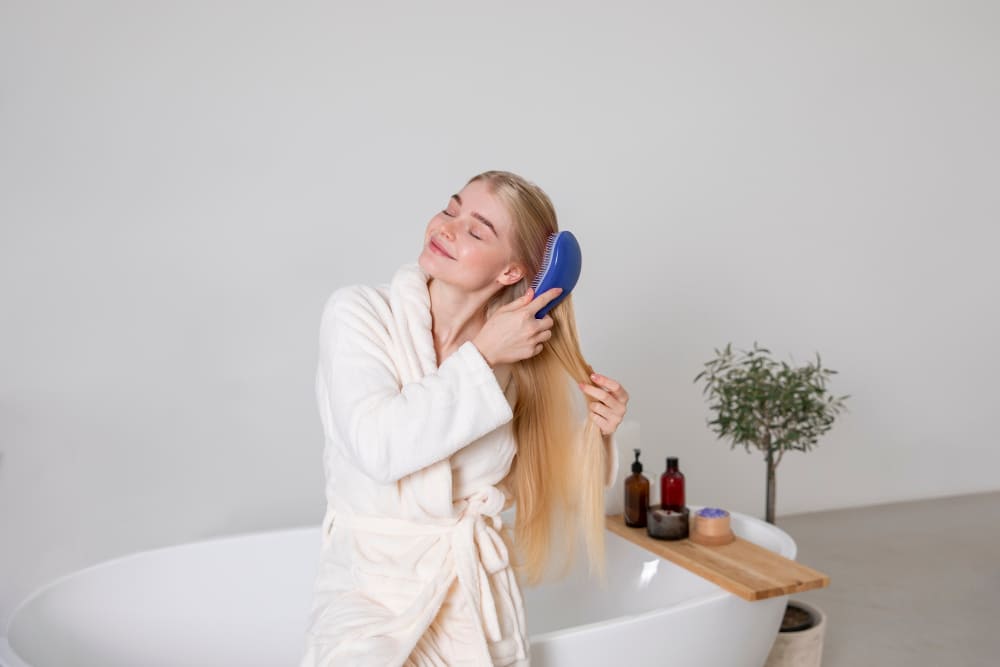
After deep conditioning, rinse fully, press your hair with a towel or T-shirt instead of rubbing, and detangle gently from the ends upward. Use a small amount of leave-in conditioner only if your hair normally needs it. If you are blow-drying, curling, or straightening, apply heat protectant and use the lowest heat that gives you the result you need. Do not immediately add oil, a second mask, and a heavy cream just because your hair is still damp.
When should you see a professional?
Book a stylist when your hair is breaking or snapping, feels gummy after lightening, stays rough despite simplifying your products, or suddenly will not hold a style. Those are situations where a deep conditioner may make the hair feel better without addressing the real cause. A stylist can look at the pattern of damage, your color and chemical history, and the products you are layering. If your scalp is sore, itchy, flaky, or reacting to products, stop the irritating product and speak with a dermatologist rather than trying more treatments.
For a tailored treatment or a conversation about what your hair can handle next, see the available options on our hair menu.
Try this on your next wash day
Pick one rinse-out deep conditioner, use a measured starting amount on damp lengths, set a timer for the label’s direction, and rinse longer than you think you need to. Then leave the rest of your routine alone for a wash or two. Your hair’s response, soft but not coated, flexible but not limp, will tell you more than a crowded shelf of treatments.

Jessica Colors
Jessica Colors writes about color, cutting and care for HairSocial, a salon with two Northern Virginia locations: Tysons Galleria and Idylwood Plaza in Falls Church. Her posts stick to the practical side of a service — what it involves, what it starts at, how long it holds and what it takes to keep it looking good between appointments. Anything specific to your own hair is better answered in person, and consultations are free at both locations.