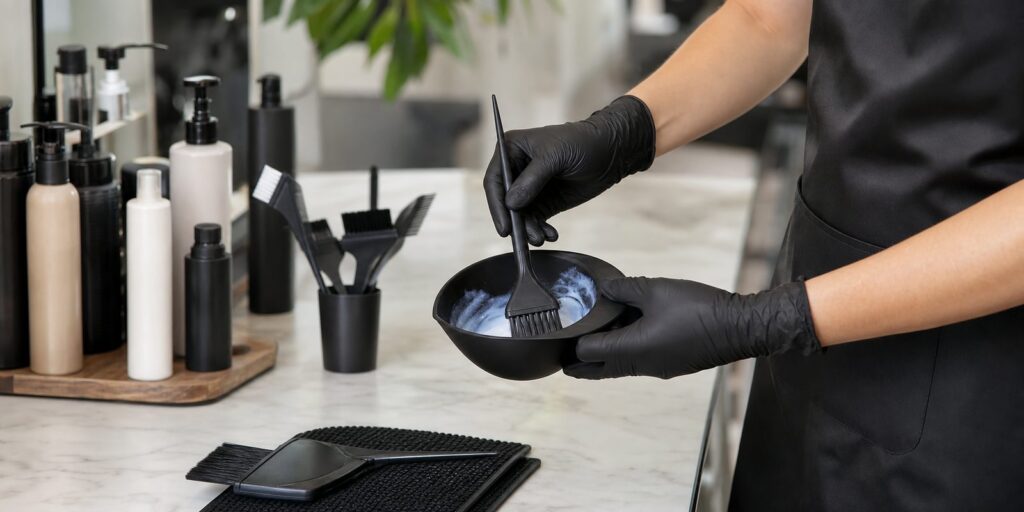
If box dye left you with uneven warmth, dark bands, or a shade that does not match your plan, color correction in Oakton VA should begin with information, not a quick promise. HairSocial uses a free consultation and a strand test to understand what your hair can handle. Our stylists then map a practical next step, which may take more than one visit.
Why Box Dye Behaves Differently
Box dye is made for broad use at home. Its formula must work across many hair types, starting shades, and application habits. Salon color starts with a consultation, a formula chosen for your hair, and a controlled application. Those differences matter when you want to change an old result.
Previous color also affects the canvas. A darker artificial shade usually does not lift evenly when another lighter color goes over it. Overlapping applications can create dense ends, a brighter root area, or bands where each application met. Hair texture, porosity, heat exposure, and time since the last color all change how a strand responds.
That is why color correction is not the same as selecting a new shade from a chart. Your stylist needs to see the current color in natural light, ask what products you used, and learn what result you want. Bring a photo of your goal and the box or ingredient information if you still have it.
What Color Correction in Oakton VA Starts With
At HairSocial, the first step for box-dyed hair is a free consultation. You and your stylist discuss the history of your color, the areas that need attention, and the amount of change you want. Be direct about every product, including color removers, henna, direct dyes, lightener, and home toners. Details help the service plan stay realistic.
During the consultation, your stylist looks at the roots, mids, and ends separately. Hair can hold color differently along its length. The plan may include a correction service, a toner or gloss, a trim, or a pause between appointments. Your stylist will explain the order rather than treating the entire head as one uniform surface.
For a clear starting point, visit the Salon Services Menu. Color work starts at $95 for a single process and starts at $195 for all over color; correction is quoted after the consultation. These are starting prices, because the work depends on the color history and the time, products, and steps your plan requires.
The Strand Test: A Small Section With Useful Answers
A strand test is a controlled test on a small section of hair before the full service. Your stylist selects a representative area and applies the planned approach. The test shows how the hair reacts, how much unwanted pigment shifts, and what tone appears underneath.
It can also reveal practical limits. The test may show that the hair needs a gentler formula, a shorter processing time, or a different sequence. It gives your stylist a chance to check elasticity, porosity, and the feel of the strand after the proposed step. If the test does not support the requested change, the plan should change.
Think of the strand test as a decision tool, not a promise of a particular finish. Hair behaves differently from one person to the next. A test cannot predict every detail, but it gives the consultation useful evidence. It also helps you understand why a gradual plan may protect the length better than one large change.
Planning Color Correction in Oakton VA
A correction plan follows the starting condition of your hair. If the issue is a small tone shift, your stylist may focus on refining the color. If box dye created several bands or a very dark base, the service may need separate steps for the roots, mids, and ends. The goal is a more even canvas that can move toward your chosen shade.
- Uneven roots: Your stylist may adjust the root area without repeating color over sections that already hold enough pigment.
- Dark lengths: The plan may address the lengths carefully, because repeated product on the same hair can change its feel.
- Unwanted warmth: A toner or gloss may refine the tone after the underlying color reaches a workable level.
- Old direct dye: The product history matters, so the strand test should come before a broader application.
Pictures can help communicate your target, but they do not replace an in-person assessment. Lighting, editing, natural depth, and the model’s starting color can make a reference look easier than it is. Your stylist will separate the goal from the method and explain what the first visit can reasonably do.
Why More Than One Visit May Be Safer
Color correction can take more than one visit. Box dye may contain layers of artificial pigment, and those layers do not always move at the same rate. A single appointment may improve the unevenness without reaching the final shade. Spacing visits gives your stylist time to evaluate the result and adjust the next step.
Your home routine also affects the plan. Use the products your stylist recommends, limit unnecessary heat, and avoid adding another color before the next appointment. Keep notes about anything you apply. A new product can change the next strand test and make the history harder to read.
HairSocial will tell you when a gradual change makes more sense. A staged plan can include a first correction, a period of care, and a later adjustment. That approach is more honest than treating a complex color history like a simple all-over service.
How Pricing Works After the Consultation
Correction pricing is quoted after the consultation because the service is built around the condition and history of your hair. The consultation helps your stylist estimate the steps, timing, and products needed. It also creates space to discuss what you want to spend before the service begins.
Hair work on the menu uses starting prices. Color work starts at $95 for a single process and starts at $195 for all over color. Correction itself is quoted after the consultation, so do not use the single-process or all-over starting figure as a promise for a multi-step correction.
Ask what the first appointment is designed to accomplish. You can also ask what maintenance may look like, what to avoid at home, and when the next evaluation should happen. Clear questions make it easier to choose a plan that fits your hair and schedule.
Preparing for Your Oakton Consultation
Arrive with clean, useful information. Write down when you last used box dye, the shade name if known, and any color remover, lightener, toner, or henna you used afterward. Bring product packaging or photos when possible. Tell your stylist about heat styling and any recent chemical service.
- Bring two or three reference photos that show the tone and depth you like.
- Explain which part of your current color you want to change first.
- Expect a strand test before a plan for box-dyed hair moves forward.
- Allow time for a conversation rather than booking a rushed transformation.
The American Academy of Dermatology Association advises people to test store-bought hair color as directed and watch for irritation; you can read its hair-coloring safety guidance. HairSocial’s consultation is not a medical evaluation. If you have a skin reaction, stop using the product and seek appropriate medical advice.
Your Color Correction in Oakton VA Next Step
Color correction in Oakton VA works best when the plan starts with the actual history of your hair. A free consultation, a strand test, and a candid discussion about more than one visit give you information before you commit to the next step. Our stylists can then shape a service plan around your current color instead of guessing from a photo.
For context on refining tone after color, read our guide to hair toning. When you are ready to discuss your box-dye history, book a consultation with HairSocial and bring the product details that can help your stylist prepare.

Jessica Colors
Jessica Colors writes about color, cutting and care for HairSocial, a salon with two Northern Virginia locations: Tysons Galleria and Idylwood Plaza in Falls Church. Her posts stick to the practical side of a service — what it involves, what it starts at, how long it holds and what it takes to keep it looking good between appointments. Anything specific to your own hair is better answered in person, and consultations are free at both locations.