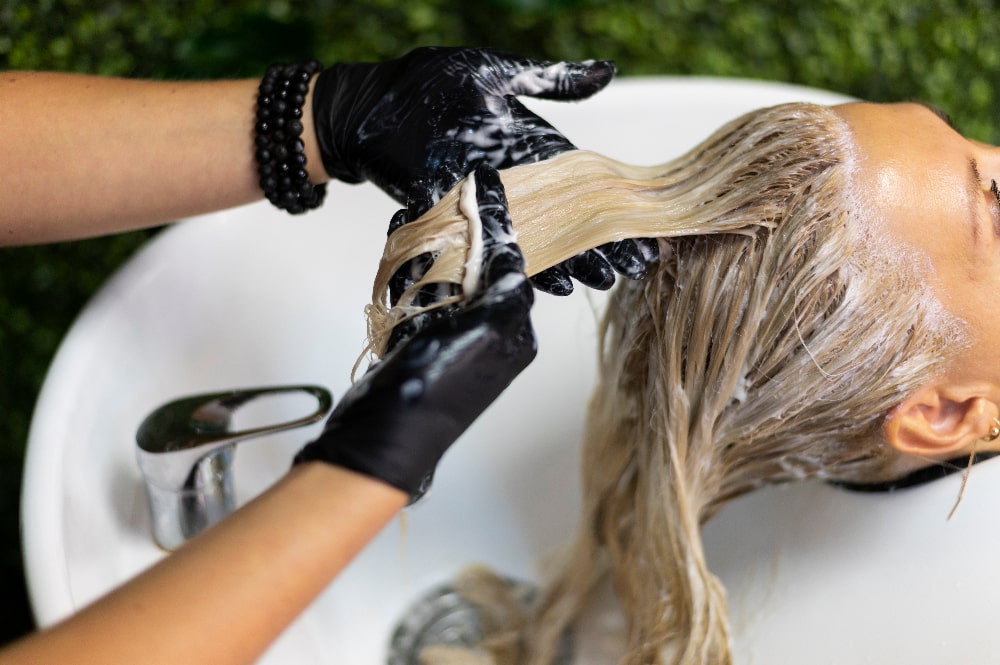
Most articles comparing foilyage and balayage describe them as two competing trends you pick between based on taste. That is not really how the decision gets made in the chair. Both techniques start with a colorist painting lightener onto your hair by hand. The difference is what happens next, and whether your hair actually needs it.
Here is the honest version, from a salon that performs both every week: the choice is mostly decided by how dark your hair is right now and how much lighter you want to be. Everything else — how it grows out, what it costs, how often you come back — follows from that.
The short answer
- Choose balayage if your hair is already light to mid-brown and you want a soft, lived-in result with the longest possible gap between appointments.
- Choose foilyage if your hair is dark or coarse, or if the highlights you want are two or more levels lighter than your natural color. Madison Reed uses that same two-level threshold as the point where foils become the better call.
If you are still deciding whether you want painted highlights at all, start with our explainer on what balayage actually is and come back to this comparison afterward.

The only real difference is the foil
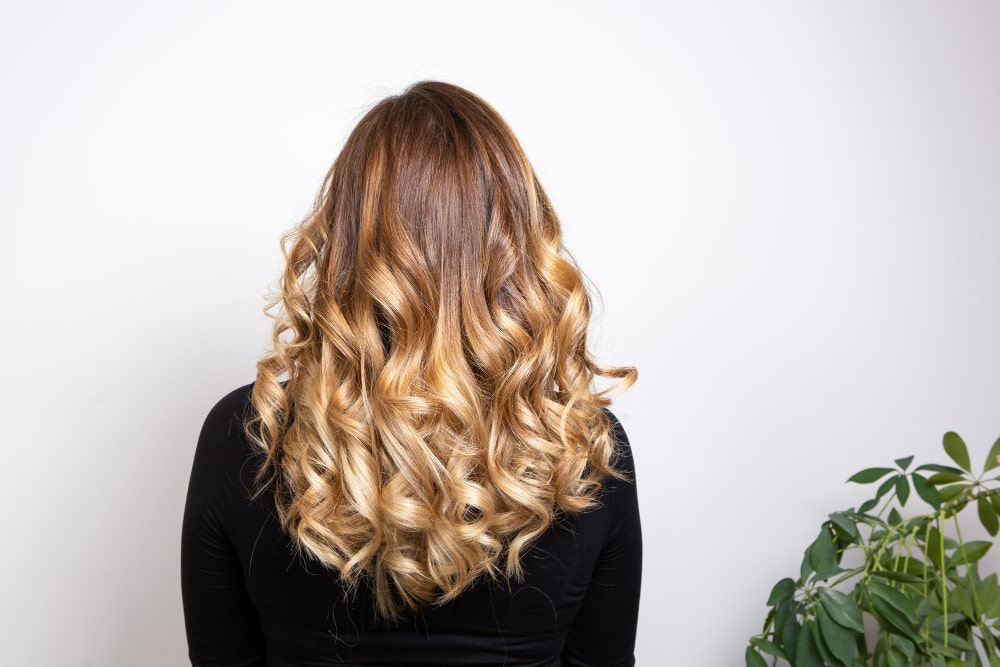
Balayage is freehand painting. The colorist sweeps lightener onto the surface of each section and leaves it in the open air, processing without foils and heat. Because the product sits on the outside of the section, it typically touches only one side of the hair — usually the outer edge, as Allure describes it. That is exactly why the result looks so soft.
Foilyage begins identically, then each painted section gets wrapped in foil. That wrap does four things at once. Rachel Bodt, a senior colorist at Cutler in New York, put it plainly to Allure: the foil “seals in the heat, helps the hair get lighter — balayage dries out when it’s exposed to air — and allows the hair to process evenly.” It also lets the lightener reach the entire surface of the section rather than one face of it. Joico’s technical guidance says the same thing from the formulation side: the foil conducts heat and delivers greater lift.
One thing worth clearing up, because it causes real confusion at consultations: foilyage is not the same as traditional foil highlights. Classic highlights lighten in a consistent pattern from root to end. Foilyage keeps the hand-painted placement, so it keeps balayage’s soft, natural grow-out — it just borrows the foil to get more lift. You may also see it spelled “foilayage,” which is how it appears on our own service menu. Same service.
Which one your hair can actually take
If your hair is dark or coarse
This is where the two techniques stop being interchangeable. Balayage does not lift dark hair especially well — celebrity colorist Rachel Bodt has described foilyage as the answer for people who want the balayage look but are “not great candidates for it because their hair is quite dark and they want it significantly lighter.” Lorean Cairns, owner of the Fox & Jane salons, told the same publication that foilyage is especially effective when the hair texture is coarse to the touch.
Push open-air balayage past what it can do on dark hair and you get the outcome nobody books for: warmth. Joico’s colorist guidance is blunt about the trade-off — balayage clients should be willing to embrace warmer tones with less lift. On dark hair that warmth reads as orange or brassy, which is the single most common complaint we hear from clients who had balayage done elsewhere.
If your hair is already light or mid-brown
You probably do not need foils. Open-air balayage will reach your target shade on its own, and you keep the softest possible regrowth line. Paying for foil work you don’t need is just paying for extra time in the chair.
If your goal is covering grey
Neither technique is a grey coverage service, and it is worth saying so directly. Both are lightening techniques, so they blend grey by reducing the contrast between it and the rest of your hair — they do not deposit pigment to cover it. If full coverage is what you want, a single process is the right service, and our guide to the best hair color choices for grey hair walks through the options. Many clients end up combining the two: single process for coverage, painted highlights for dimension.

Upkeep: what each looks like in three months
Because both techniques are hand-placed, neither leaves the hard regrowth line you get from root-to-end foils. But they are not identical. Madison Reed’s comparison puts foilyage between the two extremes: less noticeable regrowth than traditional foil highlights, but slightly faster regrowth than balayage. If your priority is stretching appointments as far as they will go, balayage still wins by a small margin.
What actually brings most clients back sooner is not regrowth — it’s tone. Lightened hair drifts warm over a few months regardless of which technique put it there. A toner or gloss resets it for a fraction of the cost of new highlights, and our breakdown of the difference between a gloss and a glaze explains which one you’re actually asking for. Building that refresh into your schedule is the cheapest way to keep either technique looking new.
What each costs at HairSocial
These are our current starting prices at both locations. Every color service is quoted in person, because length and density change the amount of product and time involved.
| Service | Starting price |
|---|---|
| Partial Balayage | $250+ |
| Full Balayage | $300+ |
| Partial Foilayage | $290+ |
| Full Foilayage | $350+ |
| Toner or Glaze | $75+ |
| Toner or Glaze with Blowout | $125+ |
The gap between the two techniques is $40 to $50, and it is not a premium for a trendier name. Wrapping and unwrapping foils takes real time, and the section work is finer. You are paying for a longer appointment.
Partial versus full matters more to your total than foilyage versus balayage does — a $50 difference on the technique, versus $50 to $60 between partial and full. Partial covers the top and sides you see most; full includes the back. If you are unsure which you need, our comparison of partial and full highlights covers how to tell, and our guide to what balayage costs in Northern Virginia puts these numbers against the regional market and the cost of upkeep between visits. The full service menu lists everything else.
What to ask for at your consultation
You do not need to arrive knowing which technique you want. You do need to arrive with the information your colorist can’t see:
- Your color history. Box color, previous lightener, henna, or a keratin treatment all change what your hair will do under lightener. This is the detail clients most often leave out, and it is the one most likely to cause a disappointing result.
- Photos of the result you want — ideally on someone whose starting color resembles yours, not just a shade you like in isolation.
- Whether this is one appointment or a plan. Going several levels lighter on dark hair is usually staged across sessions. A colorist who tells you otherwise is either promising too much or planning to over-process your hair.
- How much upkeep you will realistically do. Be honest here. The best technique for you is the one that still looks good at week ten, not week one.
On damage: foils are not inherently harsher, but they do accelerate the process, which is why professional guidance is to start with a lower developer strength for foil work. As Joico’s educator Mai puts it, you get “better (and more even) lift without damaging the hair” that way. It is a fair question to ask your colorist directly.
Common questions
Can I switch from balayage to foilyage?
Yes, and plenty of clients do once they decide they want to go brighter. Because both use hand-placed sections, a colorist can work foilyage into hair that already has balayage without a hard line where the old highlights end.
Which one lasts longer?
Balayage stretches slightly further before regrowth shows. But “lasting” is usually about tone rather than growth, and both need a toner or gloss on roughly the same schedule.
Is foilyage worth the extra cost?
If your hair is dark and your goal is meaningfully lighter, yes — it is the difference between reaching your target shade and settling for a warm approximation of it. If you are already light, the extra spend buys you very little.
Book with a colorist who does both
The advantage of booking somewhere that performs both techniques routinely is that nobody has a reason to steer you toward the one they happen to be better at. HairSocial has two Northern Virginia locations — 7511 Leesburg Pike in Falls Church and 2001 International Drive at Tysons Galleria — and consultations are free. Use the Book Online button on any page, or call 703-992-8503, and we will tell you which technique your hair actually needs before you commit to a price.

Jessica Colors
Jessica Colors writes about color, cutting and care for HairSocial, a salon with two Northern Virginia locations: Tysons Galleria and Idylwood Plaza in Falls Church. Her posts stick to the practical side of a service — what it involves, what it starts at, how long it holds and what it takes to keep it looking good between appointments. Anything specific to your own hair is better answered in person, and consultations are free at both locations.