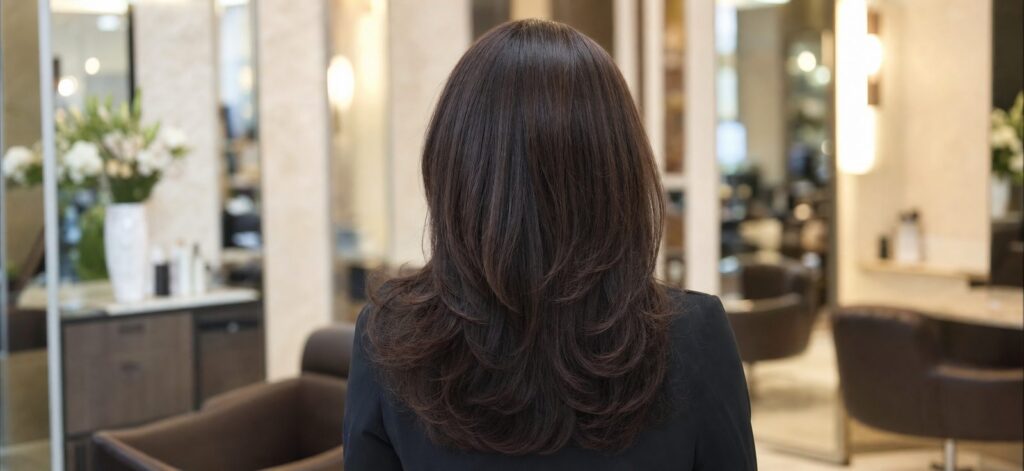
Gray coverage in Dunn Loring VA can mean blending some strands into your existing color or covering gray more fully. These approaches create different grow-out patterns and need different upkeep. Highlights or babylights can soften contrast without hiding every gray strand. A root touch-up or broader color service can suit someone who wants more coverage. A free consultation helps you compare the options against your gray pattern, color history, and comfort with visible regrowth.
Gray coverage in Dunn Loring VA: Blend or Cover?
Blending works with the gray that already shows. A stylist places color around it to soften the contrast between gray strands and your base. Some gray remains visible, so the overall look keeps variation. That can suit someone who wants a gentler shift rather than a uniform result.
Fuller coverage takes a different direction. It aims to cover more of the gray in the treated area, whether that means new growth at the roots or a broader section of hair. The two goals do not have to compete, but they do call for different placement and upkeep conversations.
Think about what catches your eye first. If you mainly notice a sharp line where new growth meets previously colored hair, blending may soften that contrast. If you want less gray to show, ask about coverage. Your stylist can explain how your current color and gray pattern affect each choice.
What Does Gray Blending Look Like?
Gray blending adds dimension instead of trying to make every strand look the same. Highlights or babylights can weave lighter pieces through selected areas. Those ribbons may sit closer to the shade of your gray, your natural color, or a tone chosen during consultation. Placement matters more than a single formula.
Because the color varies through the hair, new growth may appear less like one solid band. A softer transition can make the line less noticeable to some people. Blending does not erase gray, and it cannot promise that regrowth will disappear. Your starting color, strand pattern, and contrast all shape what you see.
Highlights and babylights also differ in scale and placement. Babylights use very fine sections, while highlights can create more visible ribbons. Your stylist can discuss which approach suits the amount of dimension you want. For gray coverage in Dunn Loring VA, explain whether you want to keep silver strands visible or reduce their contrast.
How Highlights or Babylights Soften a Grow-Out Line
A solid color can create a clear contrast when natural growth returns. Fine highlights or babylights add lighter pieces near selected areas, so the eye sees several tones rather than one solid band. This can soften the visual shift between your roots and colored lengths as your hair grows.
Placement can focus around the part, hairline, or other areas where contrast stands out to you. A few strategically placed pieces may create a different effect from highlights throughout the head. Your stylist can look at your part, base shade, and gray distribution before suggesting where the lighter sections belong.
Blending still leaves some gray visible. It also may not match the look of complete coverage. Tell your stylist if you expect every gray strand to disappear. A consultation can help clarify whether highlights or babylights support your goal, or whether a root-focused color appointment fits better.
The American Academy of Dermatology advises choosing color within three shades of your natural color. It notes that lightening by more than three shades requires higher peroxide volumes and can cause more hair damage. Read its hair-coloring tips and discuss your plan with a stylist.
Who Might Like Blending—and Who Might Not?
Blending may suit you if you like dimension and do not mind seeing some silver. It can also be worth discussing if you prefer a less defined grow-out line or want to transition gradually from frequent root coverage. Your stylist can help you decide how much contrast to keep and where to place lighter pieces.
Blending may not suit you if you want an even, opaque appearance or feel bothered by visible gray. It may also disappoint if you expect a few highlights to cover gray across the entire head. A different goal needs a different plan, and sometimes more than one visit makes sense for a larger change.
Start by naming what you want to see in the mirror. You might prefer a few silver strands with softer contrast, or you may want the roots to look more uniform. Bring a recent photo of your hair in ordinary light if that helps explain the difference. Photos can guide the discussion, though your hair may respond differently.
When Does Fuller Coverage Make More Sense?
If your priority is to hide more gray, ask about a root touch-up rather than assuming blending will do it. HairSocial calls that service Single Process Color. It focuses on regrowth at the roots and blends gray there; it does not recolor every length automatically.
If the lengths also look faded or you want a broader color refresh, ask whether All Over Color fits. It serves a different purpose from a root touch-up. During the consultation, point out which areas need attention and discuss whether the color on your lengths supports the result you want.
Previous color affects the conversation. Tell your stylist about salon color, home color, and box dye, even if you used it long ago. Box-dyed hair may need a strand test before a larger change. A small test section can help your stylist assess how that hair responds before you settle on a plan.
HairSocial’s guide to choosing hair color for gray strands covers broader color options. This page focuses on the separate choice between softening the look of gray and covering more of it.
Gray coverage in Dunn Loring VA: Compare Service Starting Prices
Single Process Color starts at $95 for a root touch-up that refreshes regrowth and blends gray at the root. All Over Color starts at $195 for color through a broader area. These are starting prices, and the consultation helps match the service to the areas you want to address.
Highlights or babylights serve a different purpose from a root touch-up. They add lighter pieces for dimension and may soften the look of regrowth, while some gray may remain visible. Check the HairSocial Salon Services Menu for the listed services, then ask which one fits your goal.
When you compare options, focus on both the visible result and the maintenance pattern. A root-focused service addresses new growth in that area. Blending places highlights or babylights for a softer contrast. A broader color service covers more of the hair. Your stylist can explain what each plan includes before you book.
What Should You Ask During the Free Consultation?
The free consultation gives you time to describe your goal before choosing a service. Tell your stylist whether you want some gray to remain visible. Point out where the grow-out line feels strongest, and say whether you prefer dimension or a more even appearance.
Ask what highlights or babylights could do for your specific gray pattern. Find out where your stylist would place them and what they would leave unchanged. If you want fuller coverage, ask whether Single Process Color or All Over Color fits the areas you want to refresh.
Share your color history, including box dye. Ask whether a strand test makes sense before you commit to a larger change. If you hope to move far from your current shade, discuss whether the plan needs more than one visit. A stepwise plan can set expectations before the first appointment.
A clear consultation also helps you compare upkeep. Ask how visible roots may look as they grow, and whether you would return for a root refresh or a blending service. Use the discussion to choose a goal you can maintain, not only a shade you like in a photo.
Gray coverage in Dunn Loring VA: Plan the Next Visit
Blending, a root touch-up, and all-over color each address a different concern. Blending keeps some gray in view and adds dimension. A root touch-up focuses on new growth. All Over Color refreshes a broader area. The right choice depends on what you want to change and what you want to keep.
Think about how much contrast you can comfortably see between appointments. Highlights or babylights may suit you if visible silver feels fine. For more uniformity at the roots, ask about Single Process Color. Mention it before you book if the lengths also need attention.
For gray coverage in Dunn Loring VA, a free consultation can turn those preferences into a practical plan. Review the Salon Services Menu, then book a consultation with our stylists. Bring your color history and questions about a strand test so you can decide whether blending or fuller coverage fits.

Jessica Colors
Jessica Colors writes about color, cutting and care for HairSocial, a salon with two Northern Virginia locations: Tysons Galleria and Idylwood Plaza in Falls Church. Her posts stick to the practical side of a service — what it involves, what it starts at, how long it holds and what it takes to keep it looking good between appointments. Anything specific to your own hair is better answered in person, and consultations are free at both locations.