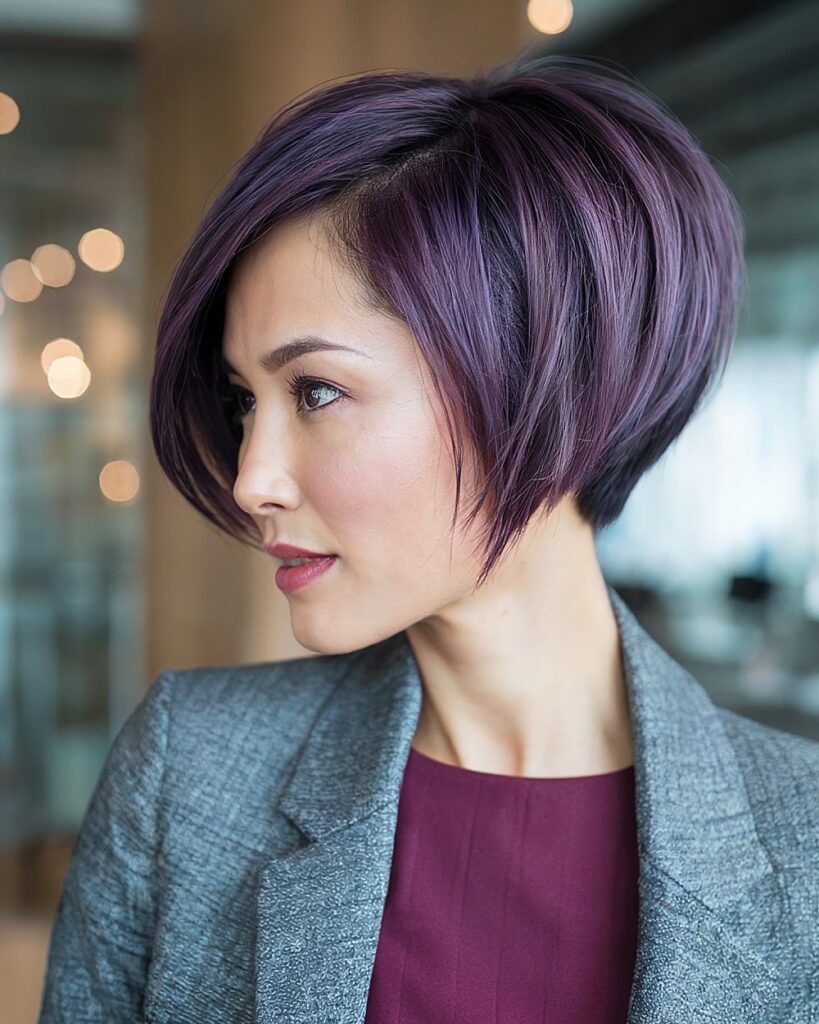
A low-maintenance haircut is not a shorter haircut or a plainer one. It is a shape cut to work with the hair you already have. That is why it still reads as intentional on day three, with no round brush needed to rescue it. For most people in Tysons, easy is what they actually mean when they ask for low maintenance.
Below are the cuts our stylists are asked for most. For each one you get who it suits, how often it needs trimming and what it costs to keep. Prices for every cut and finishing service sit on our salon services menu.
Long, blended layers
Want to keep your length but not the twenty minutes of drying time? Long layers are the usual answer. Weight comes out from inside the hair rather than off the ends, so it dries faster and moves on its own. The length you were protecting stays where it is.
This is the most forgiving shape on the list. It grows out slowly and suits nearly every face shape. Straight, wavy and curly hair all wear it, provided the layering is placed for your texture instead of copied from a photo. A few drops of Shu Uemura Essence Absolue on damp ends before air drying is often all the styling it needs.
The textured bob
A bob sits somewhere between the jawline and the collarbone. The textured version is the one built for low effort. Soft, broken ends let the shape hold itself without heat. A blunt bob, by contrast, shows every bend and wants a blow dry to look deliberate.
Some stylists call the softer, slightly longer, internally layered version an Italian bob. It is rounder and bouncier, and it is gentler on anyone who does not want a sharp line across the jaw. Bobs suit oval and heart-shaped faces easily. On rounder and squarer faces, the right length and a face-framing piece do the work.
Bobs live and die on shine, because the line is so visible. A toner or glaze starts at $75, or $125 with a blowout. Our guide to hair gloss versus hair glaze explains which of the two you want.
The butterfly cut
The butterfly cut keeps your length and adds a shorter internal layer around the face. You get the volume and movement of a shorter cut without cutting one. That is exactly why it is popular. Unlike a real chop, it undoes itself, because the short pieces grow into the long ones.
It does need more encouragement than long layers: a volumising product at the root and a rough dry. Hair with some natural body wears it best. On very fine hair the short layers can look sparse rather than full, so your stylist should adjust how much is taken and where.
The modern shag
The shag works with a natural wave or curl instead of fighting it. Heavy layering and a face-framing fringe give it shape while wet. The finish then comes from scrunching in a cream and leaving it alone. If your hair already does something interesting on its own, this is the cut that uses it.
It is the least suitable choice for anyone who wants a smooth, controlled finish. Straight, heavy hair can wear a shag. It will need product and a diffuser to read as textured rather than simply uneven, which is the opposite of low maintenance.
The wispy pixie
The pixie is cropped close through the back and sides, showing the neck and ears. The version people ask for now is soft and lived-in rather than sculpted. It is cut to fall where it wants, with a longer piece left on top to style forward or back.
Daily effort drops close to zero. Salon visits do not. A pixie needs trimming every four to six weeks to keep its silhouette, which makes it the least low-maintenance cut here once you count appointments. Strong cheekbones and delicate features suit it. The first week also takes some confidence, and that is worth being honest with yourself about first.
Short hair also builds static and dries out faster, particularly in winter under scarves and collars. A hydrating shampoo and conditioner and an occasional in-salon treatment do more for a pixie than any styling product.
Bob or pixie: how to decide
This is the most common fork in the conversation. The deciding factor is rarely the face shape.
- How often will you sit in the chair? A pixie wants a trim every four to six weeks. A bob holds its shape for six to eight, and long layers stretch to ten or twelve.
- How much do you style? A textured bob can air dry. A pixie takes two minutes but usually does take those two minutes.
- How fast do you want a change reversed? A bob grows into long layers within a few months. Growing out a pixie is a year of in-between stages.
- Do you wear your hair up? Neither ties back. If you rely on a ponytail at the gym, a collarbone length keeps that option.
Unsure? Cut to the collarbone first and go shorter at the next visit. That costs one extra appointment and removes most of the risk. Our stylists will also say plainly when a cut in your photo will not do on your hair what it did on theirs.
Matching the cut to your hair, not just the photo
Two people can ask for the same cut and leave with different shapes. Density, texture, growth pattern and how the hair sits at the crown all change what a shape does. That is what a consultation is for, and it is free here.
- Fine hair: fewer, more deliberate layers. Over-layering thins the ends and takes away the weight that makes hair look full.
- Dense hair: internal weight removal matters more than length. Otherwise the shape widens instead of falling.
- Wavy and curly hair: cut for how you actually wear it. A shape that only works pulled straight is a shape you will fight.
- A strong cowlick or a high crown: tell your stylist before the cut, not after. Fringe placement in particular depends on it.
What a haircut costs at HairSocial
A haircut and style starts at $65. A men’s cut starts at $45, and a kids’ cut starts at $45. A blow dry on its own starts at $50, and adding curls starts at $25. Our blowout membership starts at $80 a month if you have one done regularly.
Cut prices vary with length, density and how much detail the shape takes. You will be told the price before any work begins. Having color at the same visit? The balayage and highlights pages set out those starting prices separately.
Making the cut last between visits
Dry, roughed-up ends make any shape look older than it is. Most of the work between appointments is therefore condition rather than styling. We retail Wella Professionals, Kérastase and Shu Uemura at both locations. Your stylist will match products to your hair rather than sell you the range.
- Use a heat protectant before a blow dryer, curling iron or flat iron, every time. The American Academy of Dermatology is blunt that excessive heat damages every hair type in its healthy hair tips.
- Mask on the schedule your stylist gives you. Our conditioning treatments start at $75 for a Fusio-Dose or a Shu Bar cocktail, and the Kérastase Premiere ritual starts at $85.
- Book the trim before the shape collapses. A cut kept on schedule needs less done to it each time.
- If you want the finish without the work, a blowout starts at $50.
Book a cut in Tysons or Falls Church
Our stylists cut at HairSocial in Tysons Galleria and at our Falls Church salon in Idylwood Plaza. Clients also drive in from Vienna, McLean and Great Falls. Same-day appointments are often available.
Bring photos, bring your honest answer on upkeep, and we will build a shape around both. Want to see what is being asked for right now first? Our posts on seasonal haircut trends in Tysons and red carpet hair trends go further on the looks themselves. When you are ready, book an appointment or call the salon.

Jessica Colors
Jessica Colors writes about color, cutting and care for HairSocial, a salon with two Northern Virginia locations: Tysons Galleria and Idylwood Plaza in Falls Church. Her posts stick to the practical side of a service — what it involves, what it starts at, how long it holds and what it takes to keep it looking good between appointments. Anything specific to your own hair is better answered in person, and consultations are free at both locations.